스포츠 외교2026. 7. 13. 11:46

[USOPC, 선수재정지원지지 및 지배구조(Governance)강화(USOPC backs athlete funding, strengthens governance)]


7월7일자 외신기사내용 정리하여 공유합니다.


LA 2028 올림픽을 향한 카운트다운은 이미 인프라와 상업적 야망의 측면에서 측정되고 있습니다. 한편, Utah2034동게올림픽은 IOC의 역사적인 개혁을 만족스럽게 지켜보고 있습니다. 올림픽 선수들이 직접적인 재정 지원을 받게 된 것입니다(The countdown to Los Angeles 2028 is already being measured in terms of infrastructure and commercial ambition. Meanwhile, Utah 2034 looks on with satisfaction at a historic reform by the IOC: Olympic athletes will receive direct financial support).


이것은 IOC의 선수 직접 지원 제도 도입과 함께, LA28 준비 상황 및 USOPC의 거버넌스 강화라는 두 가지 축을 강조하고 있습니다.


[USOPC 보도자료 핵심 정리]


[주요 내용]


1. IOC 선수 직접 지원 제도 도입


-IOC 146차 총회에서 승인된 개혁으로, 모든 올림픽 참가 선수에게 $ 1만 달러(약 €8,700) 직접 지원.


-Milano-Cortina 2026 동계올림픽부터 적용.


-USOPC(미국 올림픽·및 패럴림픽 위원회)는 이를 환영하며 “세계 선수들에게 큰 영향”이라고 평가.


2. 거버넌스 강화


-USOPC는 승마, 탁구, 핸드볼, 수구 등 4개 종목 연맹의 규정 준수 인증 완료.


-유도 연맹은 조건부 인증.


-내부 개혁으로 CFO(Chief Financial Officer/최고재무책임자)로 Heather McCreery 임명.


3. LA28 준비 상황


-조직위원회와 협의하며 인프라·-교통-·경기장-·관객 경험 등 준비 진척 확인.


-인력 확충, 티켓 판매 성과, 상업적 개발 진전 강조.


-설계 단계(Design Stage)에서 운영 단계(Phase of Delivery)로 전환, 개막식이 가까워지며 실질적 실행 국면 진입.


4. Utah 2034 반응


-Utah 2034 동계올림픽조직위원회는 IOC 개혁을 “선수 헌신을 인정하는 중요한 진전”(direct support constitutes a substantial step forward in recognising the commitment made by athletes)으로 평가.


[분석]


1) 의미:


-IOC의 직접 지원은 올림픽 역사상 아마추어주의의 상징적 전환점으로, 선수들의 경제적 부담을 완화하고 헌신을 인정하는 제도적 진보.


2) 영향:


-LA28과 Utah 2034 준비 과정에서 선수·관객 경험 개선과 상업적 성공을 동시에 추구하는 구조 강화.


3) 전망:


- USOPC는 재정·거버넌스 개혁을 통해 향후 10년간 올림픽과 선수 관계를 재정립하는 중요한 변화를 맞이할 것으로 예상됨.


요약하면, 이번 보도자료는 IOC의 선수 직접 지원 개혁과 USOPC의 거버넌스 강화 및 LA28 준비 진척을 중심으로, 미국 올림픽 체계가 선수 중심·투명성 강화·상업적 성공이라는 세 가지 축을 기반으로 미래를 준비하고 있음을 보여줍니다.


USOPC backs athlete funding, strengthens governance

The countdown to Los Angeles 2028 is already being measured in terms of infrastructure and commercial ambition. Meanwhile, Utah 2034 looks on with satisfaction at a historic reform by the IOC: Olympic athletes will receive direct financial support.


The United States Olympic and Paralympic Committee welcomed the new grant programme approved by the International Olympic Committee, under which every participant in the Games will receive $10,000 (€8,700).


The measure, announced following the IOC's 146th Session, will begin with Milano Cortina 2026 and occupied a substantial part of the press conference held last Wednesday after the US board's virtual meetings. Gene Sykes, chair of the USOPC board, even described the initiative as "a welcome decision with a significant impact for athletes around the world".


The executive was re-elected to a second four-year term, a development that will also extend his membership of the IOC, since that status is tied to his position at the head of the United States Olympic and Paralympic body.


The reform also represents a symbolic break with the more rigid conception of amateurism that accompanied the Olympic Movement throughout much of its 130-year history. Fraser Bullock, president and chief executive of Utah 2034, explained he was "very excited and very pleased with everything I have heard". In his view, direct support constitutes a substantial step forward in recognising the commitment made by athletes.


The appearance came only days after the publication of the USOPC's 2025 Impact Report. The document details how the organisation sought to convert the energy generated around Team USA into lasting benefits for its members and for the wider sporting movement. Against that backdrop, the board examined matters relating to funding, federation oversight and the United States' next two major Olympic projects on Tuesday, 30 June.


LA28 formed another of the central themes, with Sykes explaining that the board had met officials from the organising committee to assess the state of preparations as the Games approach the two-year milestone. "Their organisational activity is intensifying significantly," he said, before highlighting the expansion of the workforce and progress across venues, transport and the athlete and spectator experience.


The chair also emphasised the project's commercial development and the results achieved so far in ticket sales.


LA28 is therefore entering a more demanding phase of delivery: the initial design stage is beginning to give way to operations, while every decision is acquiring a practical dimension as the opening ceremony draws nearer.


In the field of governance, the USOPC certified the regulatory compliance of four national governing bodies: the United States federations for equestrian sport, table tennis, handball and water polo. The judo organisation also received certification, albeit 'with conditions,' as part of the committee's continuing process of auditing and oversight.


The internal renewal was completed on Monday with the appointment of Heather McCreery as senior vice-president and chief financial officer. McCreery will report to chief operating officer Koby Langley and join the executive leadership team. Amid economic reforms, institutional controls and two Games on the horizon, the USOPC is beginning to shape a decade that could transform both its structure and the relationship between Olympism and its central protagonists.


*References:

-insidethegames

-USOPC website


Posted by 윤강로 (Rocky YOON)
스포츠 외교2026. 7. 12. 10:39

[IOC, 일본에 동계올림픽유치기회 열어 두다(IOC opens up winter doors to Japan)]


6월30일 외신기사내용 정리하여 공유합니다.


미래 동계올림픽 개최도시 위원회 위원장인 Karl Stoss는 최근 Lausanne에서 공식 성명을 발표하며, 아시아의 강국 일본이 향후 동계올림픽을 개최하기를 강하게 희망한다고 밝혔습니다(The chairman of the Commission for Future Winter Games Host Cities, Karl Stoss, recently made a formal statement in Lausanne expressing his firm desire and hope that the Asian powerhouse would host a future cold-weather Olympics).


이는 IOC가 일본을 차기 동계올림픽 유력 후보지로 고려하고 있음을 보여주며, 일본의 중요성과 우수한 설상 조건을 강조하는 내용입니다


[주요 내용]


1) IOC 발언:


-미래 동계올림픽 개최도시 위원회 위원장 Karl Stoss가 일본을 차기 동계올림픽 개최 후보로 강하게 지지한다고 공식 발표.


2) 배경:


-일본은 Milano Cortina 2026 동계올림픽에서 역대 최고 성적(메달 24개)을 기록하며 IOC가 아시아 개최를 다시 고려하는 주요 이유가 됨.


3) 과거 개최 이력:


-일본은 Sapporo 1972, Nagano 1998 두 차례 동계올림픽을 개최했으며, 하계올림픽은 1964년과 2020년(코로나로 2021년 개최) 두 차례 Tokyo에서 개최.


[향후 일정]


-스위스와의 협상이 결렬될 경우 일본은 2038년 또는 2042년 동계올림픽 유치 후보로 즉시 고려될 예정.


-Sapporo와 Nagano 지역 기업들이 지방정부에 유치 제안서를 제출하며 적극적 움직임.


[과거 문제]


-Tokyo 2020 올림픽 이후 드러난 뇌물·입찰 비리로 Sapporo의 2030 동계올림픽 유치가 무산된 바 있음.


-IOC의 이번 언급은 일본에 대한 제도적 신뢰 회복 기회로 해석됨.


[분산 개최 가능성]


-일본은 기존 인프라를 활용해 Sapporo-·Nagano-·Tohoku 지역에 경기 분산 개최 가능, 비용 절감 효과 기대.


[영향력 인물]


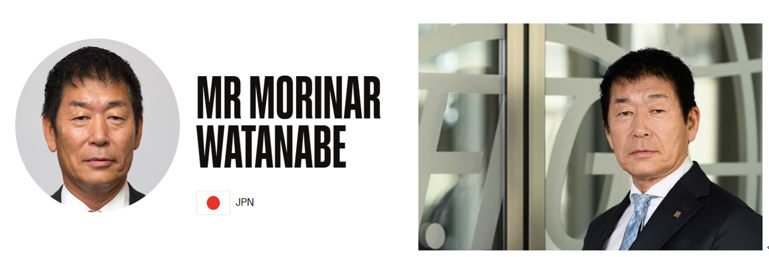
-세계체조연맹(FIG) 회장 Watanabe Morinari의 국제적 위상과 혁신적 비전이 일본 유치에 긍정적 요인으로 작용.


[기후 요인]


-지구온난화로 동계올림픽 개최 가능 국가가 줄어드는 상황에서 일본 북부 산악지대는 안정적 눈과 기후를 제공, 아시아 설상 스포츠의 미래를 지키는 중요한 거점으로 평가됨.


요약하면, IOC는 일본을 2038년 또는 2042년 동계올림픽 유치 유력 후보로 고려하고 있으며, 이는 일본의 최근 성과와 안정적 기후 조건, 그리고 기존 인프라 활용 가능성에 기반한 결정입니다. 동시에 과거 비리 사건 이후 일본이 국제적 신뢰를 회복할 수 있는 중요한 기회로도 작용할 전망입니다.


IOC opens up winter doors to Japan

The chairman of the Commission for Future Winter Games Host Cities, Karl Stoss, recently made a formal statement in Lausanne expressing his firm desire and hope that the Asian powerhouse would host a future cold-weather Olympics.


"We would like to bring it back to Japan, because Japan is a very important market with excellent snow conditions," the former president of the Austrian Olympic Committee told Kyodo News in an interview last week. Japan's historic success at the Milan-Cortina Games earlier this year has become the main sporting argument for bringing the Olympic showpiece back to Asian soil. The Japanese delegation delivered an unprecedented performance in Italy, shattering all its previous records by reaching a remarkable total of 24 medals.


That surge of podium finishes, heavily concentrated in disciplines with deep local roots such as speed skating, snowboarding and ski jumping, unleashed a wave of social and media enthusiasm across the country, despite the eccentric as well as overwhelming number of comments and insults directed at athletes and staff.


Since the winter branch of the Olympic movement began at Chamonix 1924, 27 host editions will have been staged by the time Utah 2034 arrives. Japan has hosted the Winter Games only twice: Sapporo 1972 and, 26 years later, Nagano 1998. It has also staged the Summer Games on two occasions, most recently Tokyo 2020, postponed to 2021 because of the Covid pandemic, and first in the capital in 1964.


There is currently a 'privileged' and exclusive dialogue with Switzerland.


However, Stoss made clear that, should negotiations with the European country fail to reach a definitive conclusion, Japan would immediately enter the frame for 2038, with 2042 as a direct alternative. By then, almost four decades would have passed since its last Winter Games.


Commercial and industrial groups in the prefectures of Hokkaido, whose capital is Sapporo, and Nagano have submitted formal petitions to their local governments to structure fresh bids. In Nagano, a local business group presented a proposal to the city earlier this month, urging it to put itself forward as host.


After the Tokyo 2020 Summer Games, a vast network of bribery and bid-rigging linked to commercial contracts with the organising committee came to light, causing public and institutional support to collapse and freezing Sapporo's bid for the 2030 Winter Games indefinitely. The IOC's formal nod towards 2038 or 2042 therefore could function as a form of institutional redemption.


The IOC would almost certainly accept a decentralised hosting concept as the plan would allow the island nation to spread events across existing infrastructure in different prefectures, potentially combining facilities in Nagano, Sapporo and the Tohoku region. That would avoid enormous expenditure, relying instead on current accommodation and sports complexes under an 'integrated hotels' model for athletes.


None of this comes as a surprise to IOC executives. The perfect fit for a future Japanese bid lies in the figure of the influential sports administrator Morinari Watanabe, the chief of World Gymnastics, and in his transformative vision for modern Olympism. His international profile rose sharply after he stood for the IOC presidency with a revolutionary manifesto proposing Games staged across five continents.


At the same time, studies warn that global warming will drastically reduce the number of countries with natural conditions suitable for staging winter events, real snow and safe temperatures, in the coming decades, as Inside The Games recently noted in a report featuring testimony from Milano Cortina athletes on artificial snow.


The climatic reliability of the northern mountains makes the the 'Land of the Rising Sun' one of the most prized and dependable winter refuges for safeguarding the future of snow sports in Asia.


*References:

-insidethegames

-IOC website

Posted by 윤강로 (Rocky YOON)
스포츠 외교2026. 7. 11. 10:11

[올림픽 정당성에 갇힌 가라테의 통합의 꿈(Karate’s dream of unity trapped in Olympic legitimacy)]


6월24일자 외신기사내용 정리하여 공유합니다.


세계카라데연맹(WKF)의 홍보 서사는 주로 올림픽 인정에 초점을 맞추고 있지만, Karate공동체 내에서는 그 전통적이고 단일적인 구조가 IOC가 기대하는 기준과 근본적으로 맞지 않는다는 광범위한 인식이 존재합니다(While much of the World Karate Federation’s promotional narrative has focused on Olympic recognition, there is a widespread belief within the karate community that its traditional and one-dimensional structure is fundamentally misaligned with what the International Olympic Committee expects)


이는WKF가 올림픽 무대 진출을 강조해왔지만, IOC의 요구와 Karate의 전통적 구조 사이의 불일치가 커다란 문제로 지적되고 있음을 보여줍니다.


[핵심 내용]


1) 올림픽 정체성 문제:


-세계카라테연맹(WKF)은 올림픽 인정에 집중해왔지만, 전통적이고 단일 구조는 IOC가 요구하는 기준과 맞지 않음.


2) 분열과 불통합:


-국제 카라테는 여전히 분열적이고 일관성 없는 방식으로 운영되며, WKF의 올림픽 인정은 오히려 큰 분열을 초래함.


3) Tokyo2020 올림픽 데뷔 실패:


-Karate는 Toky2020 올림픽에서 첫 등장했지만, 성과는 부정적으로 평가됨


4) 대륙별 대회 문제:


-아시아·유럽 카라테연맹은 양성평등과 거버넌스 기준에서 IOC 수준에 미달. 아시아는 여성 집행위원 전무, 유럽은 14명 중 2명만 여성.


5) 민주적 선거 부재:


-아시아·유럽 모두 회장 선거가 경쟁 없이 진행되어 민주적 정당성 부족. 특히 유럽은 1999년부터 동일 인물이 WKF와 유럽연맹을 동시에 장기 집권.


6) 구조적 문제 해결 필요:


-IOC 헌장 개정 논의에서 WKF 독점 구조를 깨고, 포용적 글로벌 Karate 연맹을 만드는 것이 유일한 해결책으로 제시됨.


7) 경기 본질 훼손:


-WKF 가라데는 태권도를 모방하는 듯한 경기 운영으로 기술적 아름다움(형·대련)이 약화되고, 규칙은 혼란스럽고 단조로워 관객 흥미가 감소


[분석]


1) 장점:


-올림픽 무대 진출로 국제적 인지도 확보, 대륙별 대회 지속으로 선수들에게 기회 제공.


2) 단점:


-WKF 독점 구조, 양성평등·민주적 거버넌스 부족, 경기 본질 왜곡으로 인한 매력 감소.


3) 향후 전망:


A. IOC 개혁 과정에서 WKF 독점 해체 논의 가능성.


B. 양성평등 및 투명한 선거 제도 도입이 국제적 신뢰 회복의 관건.


C. 경기 운영 방식 개선 없이는 관객·미디어 관심 지속 하락 위험.


요약하면, 가라데는 올림픽 정체성과 WKF 독점 구조라는 이중의 벽에 갇혀 있으며, 이를 극복하기 위해서는 포용적 글로벌 연맹 구축과 경기 본질 회복이 필수적입니다.


Karate’s dream of unity trapped in Olympic legitimacy


While much of the World Karate Federation’s promotional narrative has focused on Olympic recognition, there is a widespread belief within the karate community that its traditional and one-dimensional structure is fundamentally misaligned with what the International Olympic Committee expects.


Beyond its internal governance challenges, karate at the international level continues to operate in a fragmented and inconsistent manner. The most pressing issue, which continues to deepen, is the lack of unity across the sport. The Olympic movement’s recognition of the WKF has in practice created a significant divide. This has formed a structural barrier that has become one of the most discriminatory elements affecting karate athletes worldwide.


Although karate made its Olympic debut at the Tokyo Summer Games, its participation was widely viewed as unsuccessful based on many assessments. However, its continued presence in continental events such as the Asian and European Games has allowed the federation to maintain hope for another opportunity at the Olympic Games.


Ironically, both the Asian and European Karate Federations fall below Olympic movement standards in terms of governance and gender equality. In Asia, there are no women represented on the executive board. In Europe, only two out of fourteen executive positions are held by women. This raises serious questions about the credibility of the fourth edition of the European Games and the institutions responsible for organizing it.


In terms of governance and democratic processes, both federations also have troubling histories. In Asia, Nasser Alrazooqi of the United Arab Emirates assumed the presidency without any electoral opposition following the retirement of the former Taiwanese president. In Europe, Antonio Espinos of Spain has served as president of the European Karate Federation since 1999, while also leading the WKF. Neither federation has ever held a genuinely contested election to determine its president.


While the Olympic movement has attempted to address governance issues within international federations, it has become increasingly clear that figures such as Kirsty Coventry and her colleagues, who are involved in revising the Olympic Charter, must address a deeper structural problem. Removing the discriminatory barriers in karate and creating an open environment for global participation is only possible through one path. That path is ending the WKF’s monopoly and enabling the formation of a truly inclusive global karate confederation based on universal Olympic values.


Karate faces another fundamental issue. Equal conditions are not provided for all athletes to participate in continental games that carry Olympic legitimacy and values. In reality, a large structural barrier has divided the sport into Olympic and non Olympic organizations. This division raises serious questions about the WKF’s commitment to the principles of the Olympic Charter.


What is currently presented in karate leagues and continental competitions has moved far from the roots of this elegant martial art. In many ways, WKF branded karate appears to imitate taekwondo. This has reduced the technical beauty of both kata and kumite. Competitions have become monotonous, and the rules are often confusing and controversial. As a result, this once highly popular sport is gradually losing its appeal among audiences, both on television and across social media platforms.


*References:

-SportsIn


Posted by 윤강로 (Rocky YOON)
스포츠 정보2026. 7. 10. 10:48

[Alpes 2030, 최초의 양성평등 동계올림픽 – Freeride(스키·스노보드)와 싱크로9(피겨스케이팅) 선수 첫 데뷔]


7월7일자 IOC발표 보도자료내용 정리하여 공유합니다.


Alpes 2030 동계올림픽은 성별 균형을 달성한 최초의 동계올림픽으로 역사에 기록될 것이다. 선수 쿼터는 남녀가 동일하게 배분된다. 총 3,046명의 선수(여성 1,525명, 남성 1,521명, 조직위원회가 추가 종목으로 제안한 스키 마운티니어링 선수 포함)가 126개 경기(여성 56개, 남성 55개, 혼성 15개)에 참가할 예정이다. 이는 오늘 국제올림픽위원회(IOC) 집행위원회가 종목 및 경기 검토 과정에서 확정한 것이다. 이번 검토 결과, Free-ride(스키·스노보드)와 싱크로9(피겨스케이팅) 선수가 올림픽 무대에 처음으로 등장하게 되며, IOC 집행위원회는 스노보드 평행 대회전 종목을 유지하고 노르딕 복합은 제외하기로 했다(The Alpes 2030 Olympic Winter Games will make history as the first Winter Games with gender parity. The athlete quota places will be distributed equally. Some 3,046 athletes (1,525 female and 1,521 male, including athletes in ski mountaineering proposed by the OCOG as an additional sport) are set to compete across 126 events – 56 for women, 55 for men and 15 mixed. This was confirmed today by the International Olympic Committee (IOC) Executive Board (EB) as part of the discipline and event review. As part of the review, it was decided that freeride (ski and snowboard) and synchro9 (figure skating) athletes will feature for the first time on an Olympic stage. The IOC EB also confirmed the retention of snowboard parallel giant slalom, while Nordic combined was not retained)


이는 Apes 2030 동계올림픽이 양성평등을 달성한 첫 대회가 될 것임을 강조하면서, 새로운 종목 데뷔와 기존 종목 조정을 동시에 알리는 핵심 발표문입니다.


.

[Alpes 2030 동계올림픽 핵심 정리]


1. 주요 결정 사항


1) 첫 양성평등 동계올림픽: 총 3,046명(여성 1,525명, 남성 1,521명) 참가, 여성·남성 선수 쿼터 50:50 달성.


2) 경기 수 배분: 여성 56개, 남성 55개, 혼성 15개 경기 진행.


3) 신규 종목 데뷔:


(1) Freeride(스키·스노보드) – 자연 지형을 활용한 경기, 시각적 매력과 청소년 인기 반영


(2) Synchro9(피겨 스케이팅 팀 경기) – 양성평등 달성에 핵심적 역할, 관객 호응 높은 종목.


(Freeriding<Skiing & Snowboaring>)

(Synchro 9 <Figure Skating>)


4) 기존 종목 조정:


(1) 스노보드 평행대회전(PGS: Snowboard parallel giant slalom) 유지, 인기 지표 개선 확인.


(2) 노르딕 복합(Nordic Combined) 제외, 낮은 인기·참여율 문제 지속.


2. 추가 변화


1) 신규 이벤트 16개 추가:


-(1)바이애슬론 혼성 릴레이, (2)스피드스케이팅 팀 스프린트, (3)프리스타일 혼성 스키 크로스, (4)스노보드 혼성 팀전 등


2) 스키 Mountaineering 정식 포함:


-개인·스프린트·혼성 릴레이 경기 승인.


3) 여성 참여 확대: 루지(Luge)·스키(Skiing)·봅슬레이(bobsleigh)·아이스하키(Ice Hockey) 등에서 여성 비율 상승.


3. 의미와 전망


-IOC는 양성평등-혁신-·청소년 관심을 핵심 가치로 삼아 프로그램을 개편.


-Freeride와 싱크로9(Synchro 9)은 새로운 관객층 확보와 경기 다양성 확대에 기여할 것으로 기대.


-노르딕 복합(Nordic Combied)은 청소년 올림픽(2028)과 미래 올림픽(2034)에서 재도입 가능성은 남아 있음


요약하면, Alpes 2030은 동계올림픽 역사상 최초의 양성평등 대회로 기록되며, 새로운 종목 도입과 인기 종목 유지·조정을 통해 미래 세대와 팬들에게 더 매력적인 올림픽을 제공하려는 IOC의 전략적 전환점이라 할 수 있습니다.


Alpes 2030 to be first gender-equal Olympic Winter Games – freeride (ski and snowboard) and synchro9 (figure skating) athletes to debut


The Alpes 2030 Olympic Winter Games will make history as the first Winter Games with gender parity. The athlete quota places will be distributed equally. Some 3,046 athletes (1,525 female and 1,521 male, including athletes in ski mountaineering proposed by the OCOG as an additional sport) are set to compete across 126 events – 56 for women, 55 for men and 15 mixed. This was confirmed today by the International Olympic Committee (IOC) Executive Board (EB) as part of the discipline and event review. As part of the review, it was decided that freeride (ski and snowboard) and synchro9 (figure skating) athletes will feature for the first time on an Olympic stage. The IOC EB also confirmed the retention of snowboard parallel giant slalom, while Nordic combined was not retained.


Alpes 2030IOC NewsPress Release


[Key facts]


· 50% female and 50% male athlete quota places: Alpes 2030 will be the first Olympic Winter Games to achieve gender parity.


· 3,046 athletes are set to compete across 126 events (56 women’s, 55 men’s and 15 mixed events).


· Freeride (ski and snowboard) and synchro9 (figure skating) athletes to debut on the Olympic programme.


· Snowboard parallel giant slalom has been retained on the Alpes 2030 programme, while Nordic combined will not feature at these Games.


The Alpes 2030 discipline and event programme was approved by the IOC EB following the recommendations of the Olympic Programme Working Group (OPWG), which assessed the proposals submitted by the International Federations (IFs) and the Organising Committee with regard to ski mountaineering.


Overall, 26 new events were proposed by the IFs and the Organising Committee. The IOC EB decided to add three disciplines and 16 events, to enhance gender equality, innovation and youth interest, in line with the principles approved in 2024.


The discipline and event changes introduced for Alpes 2030 concern four sports:


Biathlon:

· Mixed singles relay (event)

Skating:

· Figure skating: synchro9 (event)

· Speed skating: men’s team sprint and women’s team sprint (events)

Ski and snowboard:

· Freeride (discipline) with men’s ski, men’s snowboard, women’s ski, women’s snowboard (events)

· Freestyle skiing: mixed team ski cross (event)

· Snowboard: mixed team snowboard parallel (event)

· Ski jumping: women’s super team (event)

· Removal of Nordic combined (discipline)


*Ski mountaineering (sport proposed by the French Alps 2030 Organising Committee and approved by the 146th IOC Session in June):


*Individual (discipline): men’s individual and women’s individual (events)


*Sprint (discipline): men’s sprint, women’s sprint and mixed relay (events)


Athlete quotas have also been adjusted across several sports and disciplines, with the overall quota set at 3,046 athletes, comprising 1,525 female athletes and 1,521 male athletes (including the OCOG-proposed sport of ski mountaineering).


These changes reflect the IOC’s commitment to ensuring that gender parity is achieved, and that the Olympic programme continues to evolve and remain relevant to future generations of athletes and fans, while controlling cost and complexity.


Freeride (ski and snowboard), and synchro9 (figure skating)


Freeride (ski and snowboard) and synchro9 (figure skating) will make their first appearance on the Olympic stage at Alpes 2030.


Freeride has experienced rapid international growth, benefitting from a strong youth fanbase and visually spectacular competition. It uses a natural field of play, which minimises its impact on the Games. Comprising four events, it will provide an Olympic opportunity for 44 athletes (22 women and 22 men) to compete at the Games for the first time. Freeride started in the 1990s to develop as a discipline.


The inclusion of synchro9, a team event, is a key factor in achieving gender parity at Alpes 2030. The event will be contested in the existing figure skating venue. Synchronised skating has demonstrated strong spectator appeal and delivers a dynamic competition atmosphere. It was officially recognised as a discipline by the International Skating Union (ISU) in the 1990s.


Snowboard parallel giant slalom and Nordic combined


When approving the Milano Cortina 2026 sports programme in 2022, the IOC EB decided to closely monitor the performance of snowboard parallel giant slalom (PGS) and Nordic combined, considering challenges observed in past editions of the Games from a participation and audience engagement perspective.

During every Games edition, the IOC conducts a global study covering all Olympic Winter Games sports, disciplines and events across key markets on all five continents. The evaluation during Milano Cortina 2026 measured 14 popularity indicators across broadcast coverage, digital media, general public interest, ticketing and press, involving up to 50+ markets per indicator.

The IOC EB noted that PGS – as part of the discipline of snowboard – had demonstrated significant improvement since Beijing 2022 across a number of popularity indicators. It was therefore decided to retain the PGS events on the Alpes 2030 programme, provided that they will not have a standalone field of play.

Based on the findings of this study, together with trends observed across previous studies of past editions of the Olympic Winter Games, the IOC EB discussed the status of Nordic combined and decided not to include the discipline on the Alpes 2030 programme.

Across most of the popularity indicators, Nordic combined ranked lowest among all Olympic Winter Games disciplines at Sochi 2014, PyeongChang 2018, Beijing 2022 and Milano Cortina 2026. At the most recent Olympic Winter Games, it was the lowest-ranked discipline in 11 of the 14 popularity indicators assessed.

In addition, the discipline continues to face challenges in terms of universality and participation at the Olympic Games. Only five National Olympic Committees (NOCs) won medals in Nordic combined across the last four editions of the Olympic Winter Games.

Nordic combined will remain on the programme of the Dolomiti Valtellina 2028 Winter Youth Olympic Games and is eligible for future inclusion at the Utah 2034 Olympic Winter Games through the candidate discipline pathway under the evaluation process established within the Fit for the Future strategic framework.

Nordic combined athletes and Olympians will continue to have access to all the programmes designed for athletes and Olympians which are available via Athlete365.

As a principle, feedback on the 14 popularity indicators has also been provided to all International Federations so that they can work closely with the IOC to further improve for the next Games editions, particularly those disciplines and events with lower rankings.

The discipline and event programme for Alpes 2030 was assessed in line with the previously established evaluation criteria and not under the new framework approved on 25 June 2026 by the IOC Session, as part of the IOC Fit for the Future process, which will be applied only from Brisbane 2032 onwards.

First gender-equal Olympic Winter Games

As a result of the changes introduced to the programme, Alpes 2030 is set to achieve gender parity by quota allocation for the first time in Olympic Winter Games history, building on the progress achieved at Milano Cortina 2026, which delivered the most gender-balanced edition to date.

Female athlete quota places will account for 50 per cent of the total quota of 3,046 athletes. The programme will also achieve parity in the number of events staged, with 56 women’s and 55 men’s events, in addition to 15 mixed events.

Additionally, four sports will increase women’s participation, with two reaching full parity:

· Luge: from 44.3% to 50%

· Skiing: from 48.6% to 50%

· Bobsleigh: from 32.9% to 39.5%

· Ice hockey: from 43.4% to 45.6%


*References:

-IOC website

Posted by 윤강로 (Rocky YOON)
스포츠 외교2026. 7. 9. 22:09

[IOC, 그린란드 및 페로제도 독립 인정 거부(IOC shuts door on Greenland, Faroe Islands recognition)]


7월2일자 외신기사내용 정리하여 공유합니다.


덴마크 의회가 최근 준 자치령인 두 지역에 대해 제출한 요청에도 불구하고, 국제올림픽위원회(IOC)는 수요일 성명을 통해 두 지역에 독립 팀 지위를 부여하지 않겠다고 밝혔다(Despite the recent request submitted by the Danish Parliament regarding its semi-autonomous territories, the International Olympic Committee issued a statement on Wednesday denying independent team status to both)


이것은 덴마크 의회의 정치적 요청에도 불구하고 IOC가 올림픽 헌장 규정(독립국만 인정)을 근거로 그린란드와 페로제도의 독립올림픽팀 인정 요구를 거부했음을 보여줍니다.


[주요 내용]


1) 덴마크 의회의 요청:


-덴마크 의회가 준 자치령인 그린란드와 페로제도를 독립 올림픽팀으로 인정해 달라는 서한을 IOC에 제출.


2) IOC의 답변:

-IOC는 올림픽 헌장(1996년 개정)에 따라 국제사회가 인정한 독립국만 올림픽팀을 가질 수 있다고 명시하며, 두 지역은 해당 조건을 충족하지 못한다고 거부.


3) 과거 논의:


-독립팀 인정 논의는 1983년부터 제기되었고, 20년 전에도 덴마크가 제안했으나 번번이 거절됨. 최근 덴마크 총리의 정치적 약속에 따라 다시 추진되었으나 결과는 동일


4) 국제 스포츠 참여 현황:


-두 지역은 이미 일부 국제 스포츠 연맹에 가입(예: 국제핸드볼연맹, 페로제도는 UEFA·FIFA에도 가입). 그러나 IOC는 이를 올림픽팀 인정 근거로 보지 않음.


5) 선수 영향:


-그린란드·및 페로제도 출신 선수들은 올림픽에 참가할 경우 덴마크 국기 아래 출전해야 함.


*예: Milano Cortina 2026 동계올림픽에서 그린란드 Nuuk 출신 Slettemark 남매(siblings)가 덴마크 대표로 바이애슬론 출전.


6) IOC 현황: 현재 IOC는 206개 국가올림픽위원회를 인정하며, 최근 30년간 독립국 기준으로 코소보와 남수단만 새로 승인.

[분석]


1) 장점:


-IOC가 헌장 규정을 일관되게 적용해 국제적 기준과 공정성을 유지.


2) 단점:


-그린란드 및 ·페로제도 선수들의 정체성과 자율성은 제한, 지역적 정치·문화적 열망과 충돌.


3) 향후 전망:


-IOC가 독립국 기준을 고수하는 한, 두 지역의 독립올림픽팀 인정 가능성은 낮음. 다만 국제 스포츠 연맹에서의 활동 확대는 지역 선수들에게 일정한 국제적 무대를 제공할 수 있음.


요약하면, 이번 결정은 IOC가 독립국만 올림픽팀 인정이라는 원칙을 재확인한 사례로, 그린란드와 페로제도의 독립적 올림픽 참여 꿈은 당분간 실현되기 어려운 상황입니다.


IOC shuts door on Greenland, Faroe Islands recognition


Despite the recent request submitted by the Danish Parliament regarding its semi-autonomous territories, the International Olympic Committee issued a statement on Wednesday denying independent team status to both.


The Olympic governing body responded promptly to the proposal submitted in a letter signed by Parliament's Speaker, Soren Gade, on 18 June and published on Tuesday, requesting that the two territories be recognised as separate teams, allowing them to compete at the Games under their own flags.


The IOC based its response on the Olympic Charter, which since 1996 has stipulated that a country may have an official team only if it is "an independent state recognised by the international community". For the Lausanne-based organisation, Greenland and the Faroe Islands do not meet that requirement and therefore cannot be granted such status. "This position has been explained and communicated very clearly to the parties concerned on numerous occasions over the past years," the IOC underlined.


The aspiration for independent statehood was first raised in 1983, even before the Olympic Charter was amended, and proposed again by Denmark 20 years ago. It has now been renewed just weeks after Danish Prime Minister Mette Frederiksen formed a new coalition government and fulfilled the promise she made during her election campaign to support Greenland in the face of repeated expressions of interest from US President Donald Trump in acquiring the island. Coincidentally, the next Summer Games will be held in Los Angeles in 2028, with Trump expected to formally open the event.


The document submitted to the IOC by the Danish presidium reflected "a clear and current political commitment by Denmark to support enhanced and fairer international participation for both the Faroe Islands and Greenland". Among the arguments put forward in support of the Danish proposal was the fact that both territories are already members of several international sports federations, most notably the International Handball Federation, and in the case of the Faroe Islands, also the Union of European Football Associations and the Fédération Internationale de Football Association.


However, the Olympic body's position has not changed and it will maintain the stance it has defended in recent years. This means that athletes from both Greenland and the Faroe Islands who reach the required standard to compete at the Olympic Games will have to do so under the Danish flag, as was the case recently at the Milan Cortina 2026 Winter Olympics, where the Slettemark siblings — Ukaleq, born in Nuuk, Greenland, who had already competed at the Beijing 2022 Winter Olympics, and her younger brother Sondre, for whom the Italian event marked his Olympic debut — both represented Denmark in the biathlon events.


At present, the IOC recognises 206 national Olympic committees, and over the past 30 years it has generally restricted membership to territories recognised by the international community as independent states, to the extent that it has approved only Kosovo and South Sudan under this criterion.


*References:

-insidethegames

-IOC website

Posted by 윤강로 (Rocky YOON)
스포츠 외교2026. 7. 9. 10:30

[(심층분석)IOC, 러시아올림픽위원회(ROC) 잠정적 자격정지 해제 – 러시아 선수 참가 관련 국제연맹(IFs) 권고사항 더 이상 적용되지 않음]


7월7일 IOC는 IOC공지사항으로 러시아올림픽위원회 자격정지를 잠정적이자만 전격 해제조치하는 깜짝 내용을 발표하였습니다.


즉, IOC집행위원회가 러시아올림픽위원회(ROC)에 대한 잠정적 자격정지를 해제했으며, 이에 따라 러시아 선수들의 국제대회 참가와 관련해 각 국제연맹에 내려졌던 권고 조건들은 더 이상 효력을 갖지 않는다는 의미입니다.


이는 IOC가 러시아 선수들의 올림픽 및 국제대회 참가에 대해 새로운 국면을 열었음을 알리는 전폭적인 메시지입니다.


이와 관련 주요내용 정리와 요약 그리고 장단점 및 향후 전망에 대하여 심층 분석하여 공유합니다.


[IOC 발표문 주요 내용]


IOC 집행위원회(EB)는 2023년 10월 12일부터 적용되었던 러시아올림픽위원회(ROC) 자격정지를 잠정적으로 해제했다. IOC 법사위원회의 검토 결과, ROC는 더 이상 우크라이나 NOC 관할 지역의 스포츠 조직을 회원으로 포함하지 않으며, 해당 지역에서 활동하지 않겠다고 확인했다. IOC는 상황을 계속 모니터링하며 필요 시 추가 조치를 취할 권리를 보유한다.


또한 IOC는 다음 사항을 명확히 했다:


1) 러시아 선수 관련 참가 조건 및 보호 조치는 더 이상 적용되지 않는다.


2) 모든 러시아 선수는 도핑방지규정(WADA 기준 포함)을 충족해야 한다.


3) IOC는 러시아에서 IOC 이벤트를 개최하지 않으며, 러시아 정부 관계자를 초청하지 않는다.


4) 러시아 국기-·국가·-색상·-상징 사용 여부는 추후 결정한다.


5) IOC는 여전히 우크라이나 올림픽 공동체와 연대한다.


IOC는 올림픽 헌장에 따라, 러시아 선수 선발 시 경기력뿐 아니라 평화적 사회를 존중하고 증진하는 모범적 역할을 수행할 수 있는지를 고려해야 한다고 강조했다.


[요약 분석]


1. 정치·지정학적 배경


-러시아의 우크라이나 침공 이후 IOC는 러시아·벨라루스 선수 참가를 제한했으나, 최근 국제 스포츠의 중립성 원칙을 재확인하며 규제를 완화하는 방향으로 전환.


-IOC는 전쟁을 강력히 규탄하면서도, 선수 개인의 권리와 기회 보장을 중시하는 입장을 유지.

2. 조건부 복귀


-선수 복귀는 도핑방지규정 준수가 핵심 조건.


-RUSADA(러시아도핑방지기구)의 신뢰성 문제로 인해, 국제검사기구(ITA)가 독립적으로 관리·검증.


IOC의 제한 유지


1)IOC 자체 이벤트는 러시아에서 개최하지 않음.


2)러시아 정부 관계자 초청 불가.


3)국기, 국가 등 상징 사용 여부는 아직 보류.


우크라이나 지원 지속


-IOC는 우크라이나 선수단을 위한 연대 기금(Olympic Solidarity Fund)을 운영하며, 훈련·여행·장비 지원을 계속 제공.


-이는 국제 스포츠 공동체의 정치적 균형과 도덕적 책임을 동시에 보여줌.


[종합 평가]


-IOC는 정치적 중립성과 선수 권리 보장이라는 올림픽 정신을 강조하면서도, 도핑방지·정부 개입 차단과·문화적 상징 관리를 통해 균형을 맞추려는 전략을 취하고 있습니다.


-이는 러시아 선수들의 국제 복귀를 허용하되, 국가적 상징과 정치적 영향력은 철저히 제한하는 절충안이라 볼 수 있습니다.


[IOC 러시아올림픽위원회(ROC) 잠정적 자격정지 해제: 장단점 및 향후 전망 분석]


1. 장점


1) 선수 권리 보장


-정부의 전쟁·갈등 참여와 무관하게 선수 개인의 국제 경기 출전 기회를 보장함으로써 올림픽 정신(평화·중립·보편성)을 강화.


2) 국제 스포츠 균형 회복


-러시아 선수들의 복귀로 경기력과 경쟁 수준이 높아져 올림픽 및 국제대회의 질적 향상 기대.


3) IOC의 중립성 강조


-정치적 상황과 선수 개인을 분리해 접근함으로써 IOC가 국제 스포츠 플랫폼으로서의 보편적 가치를 재확인.


4) 도핑방지강화


-ITA(국제검사기구) 주도의 독립적 관리로 신뢰성 확보, 러시아 선수 복귀에 대한 국제 사회의 불신 완화 가능.


2. 단점


1) 정치적 논란 지속


-우크라이나 침공에 대한 국제적 비판이 여전히 존재하는 상황에서 러시아 선수 복귀는 정치적 정당화로 비칠 위험.


2) 신뢰 문제


-RUSADA(러시아도핑방지기구)의 과거 불신 사례로 인해, 국제 사회가 여전히 러시아 선수들의 공정성에 의문을 가질 수 있음.


3) IOC 이미지 리스크


-IOC가 정치적 압력이나 경제적 이해관계에 따라 결정을 내린다는 비판 가능성.


4) 국기·국가 사용 문제


A. 러시아 상징물 사용 여부가 미정인 상태에서 향후 대회에서 또 다른 갈등 요소로 작용할 수 있음.


3. 향후 전망


1) 조건부 복귀 체제 강화


-IOC는 도핑방지규정 준수 여부를 지속적으로 점검하며, 독립적 테스트 체제를 통해 신뢰 확보를 시도할 것임.


2) 상징물 논의 지속


-러시아 국기·국가 사용 여부는 LA28 올림픽을 앞두고 가장 큰 쟁점이 될 전망.


3) 우크라이나 지원 병행


-IOC는 우크라이나 선수단 지원을 계속하며 균형을 맞추려 할 것. 이는 국제 사회의 비판을 완화하는 장치로 작용.


4) 국제연맹(IFs)별 상이한 적용


-각 종목 국제연맹은 자율적으로 러시아 선수 참가 조건을 설정할 수 있어, 종목별 편차가 발생할 가능성.

5) IOC의 전략적 시험대


-이번 결정은 IOC가 정치적 중립성과 스포츠 보편성을 유지할 수 있는지 시험하는 계기가 될 것이며, 향후 국제 스포츠 거버넌스의 중대한 선례로 남을 가능성이 큼


정리하면, IOC의 이번 결정은 1)선수 권리 보장과 2)올림픽 가치 수호라는 긍정적 측면이 있지만, 정치적 논란과 신뢰 문제라는 위험을 동시에 안고 있습니다.


향후 LA28 올림픽을 앞두고 IOC가 어떻게 상징물 사용 하느냐와·도핑방지관리·및 우크라이나 지원을 조율 하느냐가 국제 스포츠 질서의 중요한 시험대가 될 것으로 사료됩니다.


IOC provisionally lifts suspension of Russian Olympic Committee – Recommendations to IFs with regard to Russian athletes’ participation no longer applicable


The International Olympic Committee (IOC) Executive Board (EB) has provisionally lifted the suspension of the Russian Olympic Committee (ROC) that had been in effect since 12 October 2023. The decision was taken following a thorough analysis by the IOC’s Legal Affairs Commission, considering that the ROC no longer includes as its members any regional sports organisations in territories falling under the jurisdiction of the National Olympic Committee (NOC) of Ukraine. In addition, the ROC confirmed that it does not, and will not, conduct any activities in these territories. The IOC EB will continue to closely monitor the situation relating to any ROC activities in those territories, and reserves the right to take any further measures if deemed necessary.


Press Release( IOC News/IOC Executive Board)


[Key facts]


· IOC EB provisionally lifts suspension of Russian Olympic Committee


· ROC no longer includes as members any regional sports organisations in territories falling under the jurisdiction of the NOC of Ukraine


· Recommended Conditions of Participation as they relate to Russian athletes and teams, including the protective measures, no longer applicable


· All Russian athletes returning to international competition must meet relevant anti-doping requirements


· IOC will not organise IOC events in Russia or invite Russian government or state officials to its events


· IOC will take a decision in relation to the display of the Russian flag, anthem, colours or any identifications for the Olympic Games at the appropriate time


· IOC continues to stand in solidarity with the Olympic community of Ukraine


With the qualification period for both the LA28 Olympic Games and the Dolomiti Valtellina 2028 Winter Youth Olympic Games having started, and the need to offer equal access to these competitions to all athletes, the IOC EB decided that its recommended conditions of participation for International Federations (IFs) and international sports event organisers of 28 February 2022 and 28 March 2023 as they relate to Russian athletes and teams, including the protective measures, are no longer applicable.


In accordance with the Olympic Charter, and as applicable to all NOCs in general when selecting the athletes participating in the Olympic Games, the ROC must ensure that Russian athletes’ “selection [for the Olympic Games] shall be based not only on their sports performance, but also on their ability to serve as role models who respect, uphold and promote a peaceful society through sport as set forth in the Olympic Charter.” (Bye-law 2.1 to Rules 27 and 28).


The IOC already decided in May 2026 that it no longer recommends restrictions on Belarusian athletes’ participation.


To address the lack of confidence in the global sporting community relating to the return of Russian athletes to international competition and in view of the recent allegations regarding the Russian Anti-Doping Agency (RUSADA)’s governance, and pending confirmation that reinstatement conditions concerning the World Anti-Doping Code have been met, all Russian athletes returning to international competition must meet relevant anti-doping requirements, particularly those set out in the anti-doping rules of the IOC and IFs, as well as best practices established by the World Anti-Doping Agency (WADA). In particular:

· Russian athletes returning to international competition must be part of a national (RUSADA/ROC) anti-doping programme (including risk assessment, test distribution plan and results management) that is delegated to the International Testing Agency (ITA).


· All athletes newly returning to international competition must have been tested multiple times prior to their return based on a sports risk assessment.


· Considering the timeline of qualification events for the LA28 Olympic Games, and to ensure a fair opportunity for participation, the IFs are responsible for establishing the timeframe during which such testing must have occurred prior to any athletes newly returning to international competition, or for those who have not already been included in a registered testing pool.


· IFs, as part of their anti-doping programme, must agree on an overall testing programme with the ITA, including the adequate number of tests needed and the timeframe for testing.


· Should RUSADA still be considered non-compliant by WADA in 2028 prior to the LA28 Olympic Games, the IOC will instruct the ITA to ensure that all qualified Russian athletes have been subject to independent testing following the same approach.


The decision on whether to host events and sports competitions in Russia, to invite Russian government or state officials to competitions, or to allow the display of the Russian flag, anthem, colours or any other identifications, is at the discretion of each IF and international sports event organiser, and should reflect whether their national federations are in good standing. In this respect, the IOC will not organise IOC events in Russia or invite Russian government or state officials to its events. The IOC will take a decision in relation to the display of the Russian flag, anthem, colours or any identifications for the Olympic Games at the appropriate time.


Has the IOC changed its view on the Russian invasion of Ukraine?


No. The IOC took a very clear stance against the invasion, strongly condemning it. This position remains unchanged. More broadly, the IOC condemns wars, armed conflicts and violence that cause human suffering wherever they occur. At a time of growing instability and division around the world, the IOC remains committed to promoting peace through sport among people and nations.


The IOC stands in solidarity with the Olympic community of Ukraine, which the Olympic Movement has supported since the beginning of the war, and will continue to do so. The IOC established a Solidarity Fund for Ukraine so that the athletes have support to overcome the tremendous challenges they continue to face.


These efforts take the form not just of financial aid, but also logistical support to make it possible for Ukrainian athletes to continue to take part in competitions by providing travel support, training facilities, accommodation, equipment and uniforms, amongst other things. This support, and the support of many IFs, contributed to the successful participation of Ukrainian athletes and teams in the Paris 2024 Olympic Games and the Milano Cortina 2026 Olympic Winter Games. The IOC will continue its support through the existing solidarity programmes.


Why did the IOC issue recommendations to IFs and international sports event organisers in March 2023?


Following Russia’s invasion of Ukraine, in February 2022 the IOC EB recommended that IFs and international sports event organisers not allow the participation of Russian and Belarusian athletes and officials in international competitions. Following a request from the 11th Olympic Summit later that year, in March 2023, the IOC EB issued its recommendations for IFs and international sports event organisers regarding the return to international competition for athletes holding a Russian or Belarusian passport as Individual Neutral Athletes (IOC recommendations).


Did the implementation of these recommendations work?


Since the recommendations were issued, Individual Neutral Athletes have participated in numerous international IF events, as well as in the Paris 2024 Olympic Games and the Milano Cortina 2026 Olympic Winter Games. With rare exceptions, Individual Neutral Athletes have participated without any incident on or off the field of play.


How have the complex realities and consequences of the current geopolitical context shaped the discussions in the IOC, and how has the approach to neutrality changed since March 2023?


The IOC has to navigate the complex realities and consequences of the current geopolitical context. Amidst growing global instability and conflict, the IOC must uphold its mission to preserve a values-based and truly global sporting platform that provides hope to the world. This objective has been reaffirmed through the wide-ranging discussions that have taken place as part of the “Fit for the Future” process, during which the fundamental right of athletes to access sport and to compete free from political interference or governmental pressure was reaffirmed at the Olympic Summit in December 2025, the IOC Executive Board meeting in September 2025 and the IOC Session in June 2026. In June 2026, the IOC Session voted to reinforce the Fundamental Principles of Olympism and their application in the Olympic Charter.


What is the IOC’s view on athletes’ participation in international competition if their governments are involved in a war or conflict?


The IOC recognises that an athlete’s participation in international competition should not be limited by the involvement of their government in a war or conflict. In this regard, in December 2025, in view of the upcoming Dakar 2026 Youth Olympic Games, the Olympic Summit endorsed the IOC EB’s decision that youth athletes with a Russian or Belarusian passport should no longer be restricted in their access to international youth competitions, in both individual and team sports. Furthermore, at its meeting on 7 May 2026, the IOC EB decided to lift the recommended conditions of participation for International Federations and international sports event organisers of 28 February 2022 and 28 March 2023 as they relate to Belarus and Belarusian athletes, including the protective measures.


How have IFs been implementing the IOC recommendations?


Since issuing its recommendations, the IOC notes that the IFs have interpreted and implemented these based on their separate realities and the rules of their statutes relating to the participation of Russian athletes in their competitions, ranging from full admission of athletes without additional eligibility checks and with all protocol elements, such as flag and anthem, to a strict interpretation of a neutrality status or no return to competition in any capacity.


*References:

--IOC website

Posted by 윤강로 (Rocky YOON)
스포츠 정보2026. 7. 8. 11:26

[세계태권도연맹(WT), IOC 신뢰할 수 있는 AI 프레임워크 선도 (World Taekwondo pioneers IOC Trustworthy AI Framework)]


7월6일자 외신기사내용 정리하여 공유합니다.


국제 태권도 연맹은 무주에서 열린 제6회 스포츠 태권도 국제 융합 컨퍼런스에서 국제올림픽위원회(IOC)와의 인공지능 협력 관계를 발표하고, 경기 방송에 혁신을 가져올 새로운 기술들을 미리 공개했습니다(The international governing body used the 6th Sports Taekwondo International Convergence Conference in Muju to announce a artificial intelligence partnership with the International Olympic Committee and preview game-changing broadcast innovations.)


[요약 정리: World Taekwondo & IOC AI 협력]


<핵심 발표>


-세계태권도연맹(WT)이 IOC와 신뢰할 수 있는 AI 프레임워크(Trustworthy AI Framework)를 최초로 시범 적용하는 국제연맹으로 선정됨(World Taekwondo has been selected as the first International Federation)


-IOC AI 책임자 Alejandro Merino-Madrid 가 ‘올림픽 AI 아젠다’를 발표하며, AI는 목표 자체가 아닌 조직 비전 실현을 위한 전략적 도구임을 강조(Alejandro Merino-Madrid, head of AI at the International Olympic Committee. Delivering his keynote presentation titled 'Faster, Higher, Stronger – Together).


-글로벌 rollout은 2026년 8월 예정, LA 2028 올림픽 대비 협력 강화(World Taekwondo has been selected as the first International Federation to pilot the IOC Trustworthy AI Framework ahead of its global rollout in August 2026)


<경기 운영 혁신>


-FST.ai 2.5: 고속 머리 공격을 정확히 판별하는 AI 판정 지원 시스템(an advanced AI decision-support system specifically designed to assist center referees and Instant Video Replay teams in detecting and accurately classifying high-speed head kicks): 2026년 주요 국제대회에서 ‘섀도 모드’ 테스트(The system has already undergone rigorous "shadow mode" testing across major international tournaments throughout 2026) 완료


-심판용 AI 스마트 안경, 실시간 음향 디자인, 생체 데이터 그래픽, 자동 선수 해설 등 방송 혁신 기술 개발 중(Meta Ray-Ban smart AI glasses worn directly by referees to provide immersive first-person perspectives, enhanced real-time acoustic sound design, live biometric television graphics, AI-optimized Protector and Scoring Systems, and automated AI-powered athlete commentary tools)


<선수 발전 & 심리 지원>


*UC 버클리 Russell Ahn 교수:


-컴퓨터 비전 기반 킥 기술 표준화 → 전자 득점 시스템의 한계 보완(using computer vision and machine learning models trained on pre-electronic scoring eras to extract, standardize, and reward authentic kicking techniques. Coupled with a real-time multi-camera refereeing system, this technology could detect and nullify anomalous, unorthodox scoring maneuvers that lack traditional martial arts authenticity - a frequent criticism of modern electronic scoring systems)


*Mindful Warrior 프로그램:


-8주간 긍정심리학훈련으로 선수 정신적 회복력 강화('Mindful Warrior' initiative, an eight-week positive psychology program tailored to bolster competitor well-being under elite athletic stress)


<문화와 기술의 균형>


*WT 총재 조정원:


-“AI 혁신을 수용하면서도 태권도의 가치·정신·전통을 지켜나갈 것”(the delicate balance between aggressive technological modernization and cultural preservation)이라고 강조.


-학술 발표, 아이디어 경진대회 등으로 연구 성과를 실제 경기 현장에 연결.


요약하면, 이번 회의는 AI를 통한 경기 판정·방송·선수 성장 혁신과 동시에 태권도의 본질적 가치 보존을 병행하는 전략적 로드맵을 제시했습니다.


World Taekwondo pioneers IOC Trustworthy AI Framework


The international governing body used the 6th Sports Taekwondo International Convergence Conference in Muju to announce a artificial intelligence partnership with the International Olympic Committee and preview game-changing broadcast innovations.


The Conference opened in South Korea brought together leading academics, technologists, and sports administrators to chart out the discipline's future in an era of rapid digital transformation. Building upon last year's event and the discussions surrounding technological innovation at the 2025 World Taekwondo Symposium in Wuxi, the conference established a roadmap for embracing artificial intelligence while preserving the ancient martial art's core human values.


The headlines were defined by a groundbreaking announcement from Alejandro Merino-Madrid, head of AI at the International Olympic Committee. Delivering his keynote presentation titled 'Faster, Higher, Stronger – Together: Present and Future of AI and the Olympic Movement', Merino-Madrid outlined the IOC's comprehensive Olympic AI Agenda. He emphasised that artificial intelligence must serve as a strategic enabler to support organizational vision rather than acting as an end goal in itself.


Detailing the IOC's three-step methodology for prioritizing AI initiatives based on strategic fit, value, and feasibility, Merino-Madrid formally revealed that World Taekwondo has been selected as the first International Federation to pilot the IOC Trustworthy AI Framework ahead of its global rollout in August 2026. This pioneering collaboration paves the way for much closer integration between the governing body and the IOC as both prepare for the Los Angeles 2028 Olympic Games.


Practical applications of artificial intelligence inside the arena were a focal point of the presentations. Keivan Shariatmadar, a World Taekwondo Education Committee member and international referee from Luxembourg, presented an in-depth look at FST.ai 2.5 - an advanced AI decision-support system specifically designed to assist center referees and Instant Video Replay teams in detecting and accurately classifying high-speed head kicks.


The system has already undergone rigorous "shadow mode" testing across major international tournaments throughout 2026, including the Austrian, Belgian, Luxembourg, Turkish, and British Opens.


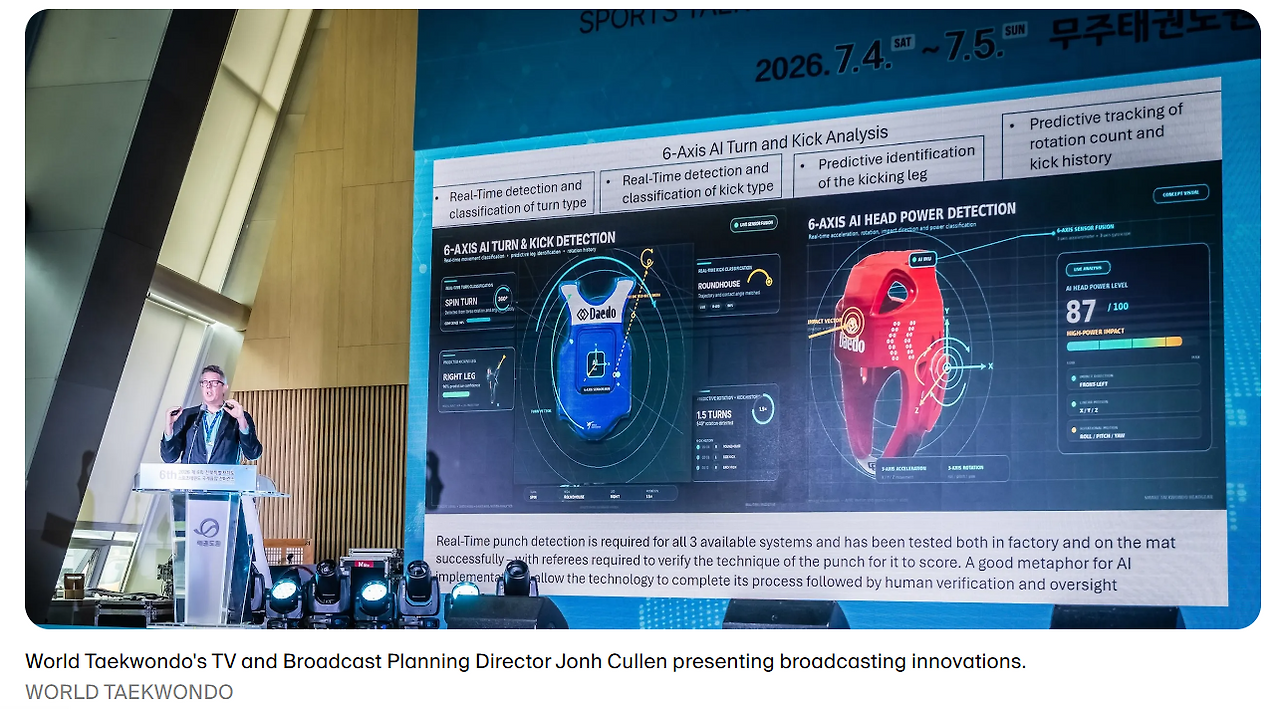
The fan and broadcast experience is also set for a major high-tech overhaul. John Cullen, World Taekwondo's TV and Broadcast planning director, detailed an ambitious pipeline of AI-assisted enhancements designed to bring television audiences closer to the action.


Among the innovations actively being developed and deployed are Meta Ray-Ban smart AI glasses worn directly by referees to provide immersive first-person perspectives, enhanced real-time acoustic sound design, live biometric television graphics, AI-optimized Protector and Scoring Systems, and automated AI-powered athlete commentary tools.


Beyond officiating accuracy and broadcast entertainment, researchers proposed ways to use AI to improve the physical and psychological development of the athletes themselves. Professor Russell Ahn of the University of California, Berkeley, outlined an innovative three-tier AI framework designed to address long-standing technical challenges within modern Olympic taekwondo.

Ahn proposed using computer vision and machine learning models trained on pre-electronic scoring eras to extract, standardize, and reward authentic kicking techniques. Coupled with a real-time multi-camera refereeing system, this technology could detect and nullify anomalous, unorthodox scoring maneuvers that lack traditional martial arts authenticity - a frequent criticism of modern electronic scoring systems. To balance physical technology with mental resilience, Ahn also introduced the 'Mindful Warrior' initiative, an eight-week positive psychology program tailored to bolster competitor well-being under elite athletic stress.


Addressing delegates during the opening ceremony, World Taekwondo President Dr. Chungwon Choue highlighted the delicate balance between aggressive technological modernization and cultural preservation.


"Since its inaugural edition, this conference has become an important platform for experts and researchers to exchange ideas and help shape the future of Taekwondo," President Choue said. "As AI continues to transform sport, we have an opportunity to enhance coaching, officiating, athlete development and fan engagement through responsible innovation. While embracing new technology, World Taekwondo will continue to ensure that the values, integrity and spirit of Taekwondo remain at the heart of everything we do."


The conference transitioned into deep-dive workshops focusing on the commercial and industrial value enhancement of competitive taekwondo, culminating in an interactive AI Idea Competition and an Academic Research Presentation session designed to translate theoretical research directly onto the field of play.


*References;

-insidehtgames

-WT website

Posted by 윤강로 (Rocky YOON)
스포츠 외교2026. 7. 7. 12:10

[왜 IOC가 FIFA보다 전략적 위험에 처할 가능성이 더 클 수 있을까? (Why the IOC may face greater strategic risk than FIFA?)]


7월1일자 외신기사내용 다음과 같이 요약 정리하여 공유합니다.


[IOC와 FIFA의 전략적 위험]


한때 FIFA는 거센 비판을 받았지만, 2022 카타르 월드컵을 앞둔 4년간 $75억 달러의 수익을 기록하며 역대 최고치를 경신했습니다. 러시아 월드컵 때보다 $10억 달러 이상 늘어난 수치였죠. 이는 “비판이 반드시 재정적 손실로 이어지지는 않는다”는 사실을 보여줍니다.


그렇다면 질문이 생깁니다. 왜 FIFA는 평판 압력을 이렇게 잘 흡수하는데, IOC는 더 취약해 보일까?


1. FIFA의 전략적 전환


2015년 부패 스캔들 이후 FIFA는 빠르게 스폰서십 모델을 재편했습니다. Sony와 Emirates항공 같은 전통적 파트너가 떠나자, 중국의 완다·비보, 중동의 사우디 아람코·카타르항공 같은 국가 연계 기업들(Wanda and Vivo, along with state-backed companies from the Middle East including Saudi Aramco and Qatar Airways)이 자리를 채웠습니다.


The 76th FIFA Congress, in Vancouver, 2026


이들의 목적은 단순한 수익이 아니었습니다. 글로벌 가시성과 지정학적 영향력이 더 큰 동기였죠. 스폰서십은 곧 소프트 파워의 도구가 되었고, FIFA는 인권 문제를 뒤 순위로 두면서 개최권과 전 세계적 노출을 제공했습니다.


2. IOC의 다른 현실


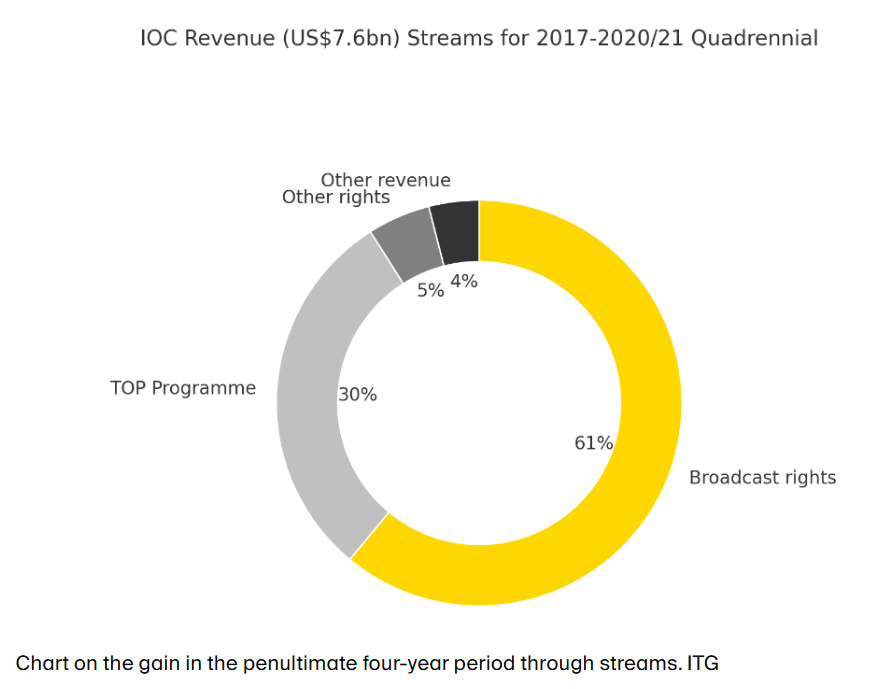
IOC의 TOP 프로그램은 Coca-Cola(현재 계약종료), Visa, Toyota(2024년 계약 종료) 삼성, 인텔 같은 다국적 소비재 기업에 크게 의존합니다. 이들은 브랜드 이미지와 소비자 신뢰에 민감하기 때문에, 평판 리스크가 곧 성과에 직결됩니다. Toyota가 Paris2024 이후 TOP 파트너십을 갱신하지 않기로 한 결정은 이를 잘 보여줍니다. IOC와 선수 관계, 올림픽 환경의 복잡성이 이유였습니다


3. 중국과의 접점


이런 맥락에서 IOC는 중국과의 협력을 강화하고 있습니다. 최근 IOC 수장인 Coventry 위원장은 시진핑 주석을 비롯한 중국 고위 인사들과 만나 장기적 파트너십을 논의했습니다. 중국은 예측 가능한 운영 환경, 장기 인프라 계획, 정부의 강력한 지원을 제공하며, 2028년까지 1억 명 참여 목표의 스포츠 프로그램을 추진 중입니다. 이는 IOC에 안정성과 엄청난 규모의 관중을 동시에 제공합니다.


Protest against Beijing 2022 – Chinese Embassy In London


4. 그러나 안정성의 대가


IOC는 최근 ‘Fit for the Future’ 전략에 따라 헌장을 개정하며 중립성 강화를 선언했습니다. 하지만 인권 단체와 일부 정부는 “중립이 오히려 특정 세력을 간접적으로 돕는 정치적 행위가 될 수 있다”고 지적합니다.


즉, 문제는 단순히 중립을 유지하는 것이 아니라, 스포츠·외교·글로벌 영향력이 얽힌 세계에서 중립이 여전히 유효한가라는 더 근본적인 질문으로 옮겨가고 있습니다.


5. 앞으로의 과제


IOC가 균형을 유지할 수 있을지는 불확실합니다. 그러나 분명한 것은 앞으로의 올림픽 거버넌스는 단순한 스포츠 성공만으로 평가되지 않을 것입니다. 상업적 지속 가능성, 지정학적 복잡성, 공적 정당성을 어떻게 조화시키느냐가 IOC의 미래를 결정할 핵심 기준이 될 것입니다


Why the IOC may face greater strategic risk than FIFA?


FIFA recorded revenues of $7.5 billion in the four-year commercial cycle leading up to the 2022 Qatar World Cup, setting a new record more than $1 billion higher than the previous cycle linked to Russia 2018, demonstrating that public criticism does not necessarily translate into financial damage.


This raises an important question. Why has FIFA been able to absorb reputational pressure so effectively while the International Olympic Committee appears more exposed?


The answer lies in strategy. After the corruption crisis of 2015, FIFA moved quickly to reshape its sponsorship model. When traditional partners such as Sony and Emirates stepped away, they were replaced by major Chinese corporations like Wanda and Vivo, along with state-backed companies from the Middle East including Saudi Aramco and Qatar Airways.


These partnerships are not driven purely by commercial return. For state-linked sponsors, global visibility and geopolitical influence often outweigh profitability. Sponsorship becomes an instrument of soft power. In return, FIFA offers hosting rights and worldwide exposure while placing human rights concerns lower on its list of priorities.


The Olympic model is different


The IOC’s TOP programme depends heavily on multinational corporations such as Coca-Cola, Visa, Toyota, Samsung and Intel. These companies operate in consumer-driven markets where brand image, reputational sensitivity and public trust directly affect performance.

Toyota’s decision not to renew its long-standing TOP partnership after Paris 2024 illustrates the sensitivity of Olympic sponsorship to reputational considerations. The company cited concerns including the growing complexity surrounding the Olympic environment and the evolving relationship between the IOC and athletes.


This context helps explain the IOC’s growing engagement with China.


IOC President Kirsty Coventry, alongside senior Olympic leadership, recently travelled to Beijing and Guangzhou to meet Chinese officials including President Xi Jinping. The visit underlined a broader strategic direction and a potential diversification of partnerships.


From the IOC’s institutional perspective, China offers a highly predictable operating environment, long-term infrastructure planning and strong governmental support for major sporting events. These characteristics provide organisational certainty for projects that require long-term planning and significant public investment.


China also represents unmatched scale. A major initiative launched in cooperation with the China Institute of Sport Science aims to engage up to 100 million people through community-based and digital sport participation programmes by 2028.


For the Olympic Movement, this extends beyond grassroots development. It represents access to one of the largest potential audiences in the world at a time when youth engagement and traditional sports viewership in several Western markets are facing structural pressure and long-term decline.


Coventry described China as a strong and reliable partner. The political value of that relationship is clear. It offers stability and reach, but it also raises deeper questions.


But this stability comes at a cost


At its 146th Session in Lausanne, the IOC approved significant changes to the Olympic Charter as part of its Fit for the Future strategy. The reforms reinforce the principle of neutrality and introduce more flexibility in shaping the Olympic programme based on global appeal and cost.


The emphasis on neutrality is intended to shield sport from external interference. Some governments, human rights organisations and governance observers argue that this approach risks producing the opposite effect. By avoiding clear positions on global conflicts and human rights issues, the IOC may be engaging in a form of political positioning that indirectly favours certain actors.

This is where the real weakness lies


The challenge is no longer simply about maintaining neutrality. An increasingly debated governance question is whether neutrality can continue to function as originally conceived in a geopolitical environment where sport, diplomacy and global influence are becoming progressively intertwined.


Whether the IOC ultimately succeeds in maintaining that balance remains uncertain. What appears increasingly evident, however, is that future Olympic governance will be judged not only by sporting success, but by the institution’s ability to reconcile commercial sustainability, geopolitical complexity and public legitimacy within a rapidly changing international environment.


*References:

-SportsIn


Posted by 윤강로 (Rocky YOON)
스포츠 외교2026. 7. 6. 10:41

[삼성의 IOC TOP 파트너 계약 2028년 종료 가능성과 향후 전망]


[삼성의 향후 전망]


1. 계약 종료 가능성


1) 브랜드 전략 변화:


-삼성은 글로벌 마케팅에서 올림픽 후원의 ROI(투자 대비 효과)를 재검토하고 있습니다.


-디지털·스포츠 마케팅 다변화: 올림픽 후원 대신 e스포츠, 글로벌 테크 전시회, AI·모바일 중심 마케팅으로 무게를 옮길 가능성이 큽니다.


-IOC 파트너십 불안정성: 최근 일본 대기업들의 연쇄 이탈(Toyota, Panasonic, Bridgestone 등)로 IOC TOP 프로그램 자체가 흔들리고 있어, 삼성도 계약 종료를 선택할 수 있다는 관측이 있습니다.


2. 계약 연장 가능성


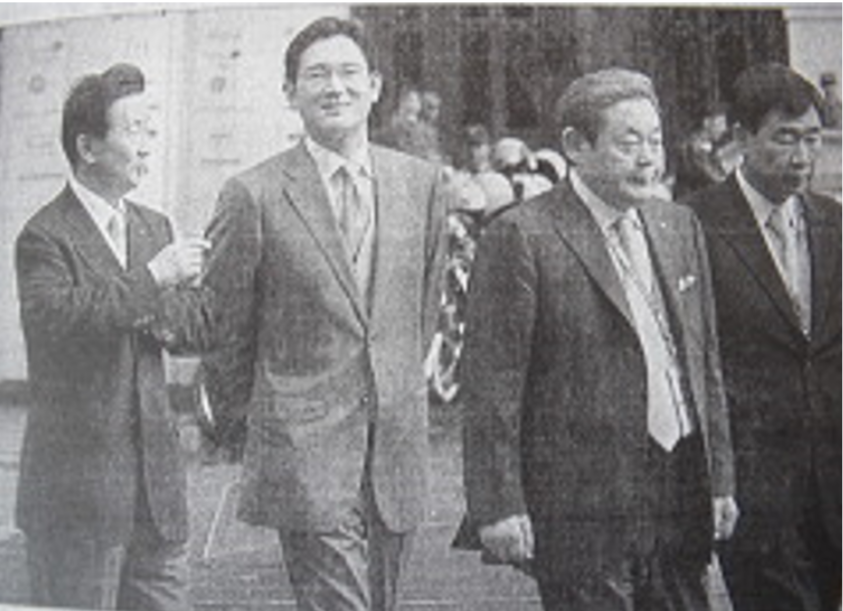
(좌로부터 평창2014유치위 국제총장시절 필자, 이재용 현 삼성그룹회장, 고 이건희 회장 겸 IOC위원, 김준 비서실장/2007년 과테말라 IOC 총회 기간 중))


1) 아시아 대표성:


-삼성은 현재 IOC TOP 파트너 중 유일한 한국 기업으로, 중국의Alibaba와 TCL과 함께 아시아 시장을 대표하는 상징적 위치를 갖습니다.


2) 브랜드 글로벌 노출:


-올림픽은 여전히 세계 최대 스포츠 이벤트로, 삼성의 글로벌 이미지 제고에 기여할 수 있습니다.


3) IOC와의 관계 유지:


-IOC는 아시아 기업의 참여를 중시하기 때문에, 삼성에 계약 연장을 적극적으로 요청할 가능성이 있습니다.


3. 시나리오 별 전망


1) 종료 시나리오:


-2028 이후 삼성은 올림픽 후원을 중단하고, 대신 AI·모바일·e스포츠 중심 마케팅으로 전환.


2) 연장 시나리오:


- IOC가 아시아 기업 참여를 유지하기 위해 삼성과 재계약을 추진, 단 규모 축소·조건 변경 가능성 있음.


3) 혼합 시나리오:


-삼성은 올림픽 후원을 유지하되, 디지털·지속가능성 중심의 후원 방식으로 재편.


[결론]


-삼성의 IOC TOP 파트너십은 2028년까지 확정되어 있지만, 이후는 불확실성이 큽니다.


-IOC의 파트너십구조가 흔들리는 상황에서 삼성은 계약 종료 가능성을 열어두고 있으며,


-동시에 아시아 대표 기업들 중 하나로서 연장 압력을 받을 수도 있습니다.


-결국 삼성의 선택은 올림픽 후원의 ROI(투자대비효과)와 글로벌 브랜드 전략에 따라 결정될 것이며, IOC 역시 삼성 같은 아시아 대기업을 붙잡기 위해 상당한 노력을 기울일 것으로 보입니다.


[IOC가 삼성에 제시할 수 있는 조건]


1. 지속가능성 중심 후원 모델


-IOC는 최근 파트너십에서 환경·지속가능성·탄소중립을 핵심 가치로 강조하고 있습니다.


-삼성은 ESG 경영을 내세우고 있기 때문에, IOC는 “올림픽 지속가능성 프로젝트”와 연계된 후원 조건을 제시할 가능성이 큽니다.


*예: 올림픽 경기장 내 친환경 기술 도입, 재생에너지 기반 ICT 솔루션 제공.


2. 디지털·AI 후원 모델


-IOC는 디지털 전환과 팬 경험 강화를 위해 AI·5G·메타버스·스마트 디바이스 분야 파트너를 필요로 합니다.


-삼성은 모바일·AI·반도체 강자로서, IOC는 “올림픽 디지털 혁신 파트너”라는 새로운 후원 카테고리를 제안할 수 있습니다.


*예: 올림픽 앱·AR/VR 중계·AI 기반 경기 분석 서비스 제공.


3. 아시아 대표성 강조


-일본 대기업들이 연쇄적으로 TOP 프로그램에서 이탈한 상황에서, IOC는 아시아 대표 기업을 유지해야 합니다.


-삼성은 유일한 한국 기업으로서, IOC는 “아시아 시장 확장”을 명분으로 계약 연장을 설득할 수 있습니다.


*예: 아시아 청소년 스포츠 지원 프로그램, 아시아 선수 훈련 허브 후원.


4. 조건부·축소형 계약


-IOC는 삼성의 부담을 줄이기 위해 후원 범위 축소나 조건부 계약을 제시할 수 있습니다.

*예: 특정 올림픽(Brisbane 2032, 2036 개최지)만 집중 후원, 혹은 디지털 분야만 후원.


[결론]


-IOC는 삼성 계약 연장을 위해 지속가능성·디지털 혁신·아시아 대표성을 핵심 조건으로 내세울 가능성이 큽니다.


-삼성은 ROI(투자 자본 수익률/Return On Investment)를 고려해 계약 종료를 검토할 수 있지만, IOC는 아시아 기업의 존재를 유지하기 위해 맞춤형·축소형·혁신형 후원 모델을 제안하며 협상을 이어갈 것으로 전망됩니다.
Posted by 윤강로 (Rocky YOON)
스포츠 문화2026. 7. 4. 10:33

[McDonald’s와 Coca-Cola 등 미국글로벌기업이 IOC TOP파트너에서 이탈한 이유]


McDonald’s와 Coca-Cola가 IOC TOP 파트너에서 빠진 이유는 각각 사업 전략 변화와 브랜드 이미지·정치적 리스크 때문입니다.


McDonald’s는 글로벌 성장 전략에 따라 올림픽 후원을 중단했고, Coca-Cola는 장기 파트너였지만 건강·환경·정치화 문제로 IOC와의 관계를 재조정했습니다.


(2024년 당시 IOCTOP Partners 15개 기업 현황)


1. 맥도날드(McDonald’s) 이탈 이유


1) 사업 전략 전환:


-McDonald’s는 40년 넘게 올림픽을 후원했지만, 2017년 글로벌 성장 전략에 따라 마케팅 우선순위를 재조정하며 IOC와 합의해 계약을 종료했습니다.


(IOC website에 등재된 2026년 IOC TOP Partners현황/실제로 Coca-Cola는배제상태임)


1) IOC 공식 입장:


-IOC는 “McDonald’s가 다른 사업 우선순위에 집중하기 위해 상호 합의로 파트너십을 종료했다”고 발표.


2) 영향:


-평창 2018까지는 마케팅 권리를 유지했지만 이후 완전히 철수. 이는 IOC 역사상 가장 오래된 파트너십 중 하나의 종료였습니다.


2. 코카콜라(Coca-Cola) 이탈 이유


1) 장기 파트너십:


-코카콜라는 1928년부터 올림픽을 후원해온 가장 오래된 TOP 파트너였습니다.


2) 변화 배경:


-최근 IOC와의 관계에서 정치화 논란, 건강·환경 문제가 겹치며 브랜드 이미지 관리 차원에서 후원 구조를 재조정했습니다.


3) 전문가 분석:

-일부 기업들은 IOC가 점점 정치화되고 있다고 비판했고, 코카콜라 역시 소비자 건강·환경 책임을 강조하는 방향으로 마케팅 전략을 바꾸면서 IOC와의 장기 계약을 축소했습니다


[IOC TOP 파트너 현황 (2026년 기준)]


현재 남아 있는 IOC TOP 파트너는 12개 글로벌 기업입니다:


-Samsung, Visa, Allianz, Airbnb, Alibaba, P&G, Deloitte, Omega, AB InBev, TCL, Intel, Atos 등.


<시사점>


1) IOC 재정 구조:


-방송권과 TOP 파트너십에 크게 의존하기 때문에, 대형 브랜드 이탈은 IOC 재정과 이미지에 큰 타격.


2) 브랜드 전략 변화:


-글로벌 기업들은 올림픽 후원을 단순 광고가 아닌 사회적 책임·환경·정치적 리스크 관리와 연결해 판단.


3) IOC 과제:


-새로운 파트너 유치와 기존 파트너 유지 사이에서 정치적 중립성과 지속가능성을 강화해야 함.


결론적으로, McDonald’s는 사업 우선순위 재조정, Coca-Cola는 브랜드 이미지와 정치·환경 리스크 관리 때문에 IOC TOP 파트너에서 빠졌습니다.


이는 IOC와 글로벌 기업 간 관계가 단순 후원을 넘어 정치·사회적 책임과 직결된다는 점을 보여줍니다.


[향후 전망]


1. IOC 파트너십구조 변화


1) 브랜드 다변화:


-기존 소비재·패스트푸드 중심에서 테크·금융·디지털 플랫폼 기업으로 무게 중심 이동.


2) 사회적 책임 강조:


-환경, 건강, 인권 등 글로벌 어젠다와 맞는 기업만이 장기 파트너로 남을 가능성이 큼.


2. 기업 측면


1) 브랜드 리스크 관리:


-맥도날드-코카콜라처럼 건강·환경 논란이 큰 기업은 올림픽 후원에서 점차 이탈.


2) ROI(Return On Investment: 투자 대비 효과) 재검토:


-올림픽 후원이 과거처럼 압도적 효과를 내지 못하면서, 기업들은 디지털·SNS 기반 마케팅으로 무게를 옮김.


3. IOC 측면


1) 재정 안정성 과제:


-방송권 수입에 크게 의존하는 IOC는 TOP 파트너 축소가 재정적 위험 요인이 될 수 있음.


2) 새로운 파트너 유치 필요:


-지속가능성·테크·AI·핀테크 분야 기업을 적극적으로 끌어들여야 함.


3) 정치적 중립성 강화:


-기업들이 IOC의 정치화 리스크를 우려하는 만큼, IOC는 중립성과 투명성을 더 강조해야 함.


4. 장기적 시나리오


1)“뉴 에라” 가능성:


-올림픽 파트너십이 전통 소비재 중심에서 디지털·지속가능성 중심으로 재편.


2)“위기” 가능성:


-글로벌 대기업들이 후원을 줄이면 IOC의 재정 기반이 약화될 수 있음.


-현실적으로는 두 흐름이 동시에 나타나며, IOC는 새로운 산업군과의 파트너십을 통해 균형을 맞출 것으로 전망됩니다.


[결론]


-McDonald’s와 Coca-Cola의 이탈은 단순한 후원 중단이 아니라, 올림픽 후원 구조가 새로운 시대에 들어섰음을 알리는 신호입니다.


-앞으로 IOC는 환경-·지속가능성·-디지털 혁신을 대표하는 기업들과 손잡을 가능성이 크며, 이는 올림픽 브랜드 자체의 성격을 바꾸는 계기가 될 수 있습니다.


[IOC TOP 파트너십 향후 전망]

1. 스폰서 이탈과 불안 요인


1) 최근 일본 대기업 Toyota, Panasonic, Bridgestone이 연쇄적으로 IOC TOP 프로그램에서 탈퇴하면서 IOC 재정 구조에 충격을 주었습니다.


2) 일부 기업들은 IOC가 정치화되고 있다는 점을 공개적으로 비판했고, 다른 기업들은 경영적 고려나 전략 재편을 이유로 철수했습니다


2. 현재 남아 있는 파트너


-여전히 삼성, Visa, Allianz, Airbnb, Alibaba, P&G, Deloitte, Omega, AB InBev, TCL, Intel, Atos, Coca-Cola 등 12개 글로벌 기업이 TOP 파트너로 활동 중입니다


-그러나 일부 기업(예: Samsung, Intel, Atos)은 계약 만료 시점이 다가오고 있어 변동 가능성이 존재합니다.


3. IOC 전략 변화


-IOC는 지속가능성·사회적 책임·포용성을 핵심 가치로 내세우며, 스폰서 선정 기준을 강화하고 있습니다.


-McDonald’s가 건강 문제로 2017년 계약을 종료한 사례처럼, 앞으로도 IOC는 브랜드 이미지와 사회적 메시지가 올림픽 가치와 일치하는지를 중시할 전망입니다.


4. 향후 시나리오


1) 위기론:


-일본 대기업들의 이탈은 IOC 재정에 단기적 타격을 주며, 일부 기업의 추가 이탈 가능성도 존재합니다.


2) 전환점론:


-전문가들은 스폰서 교체를 “정상적인 순환”으로 보고, 새로운 글로벌 브랜드 유치 가능성을 강조합니다.


3) 대안 모델:


-IOC가 글로벌 TOP 대신 국가·지역 단위 후원 모델을 확대할 가능성도 제기됩니다.


4) 낙관론:


-올림픽 브랜드의 매력과 글로벌 노출 효과는 여전히 강력해, 새로운 기업들이 TOP 스폰서로 합류할 것이라는 전망도 있습니다


[결론]


IOC TOP 파트너십은 현재 위기와 기회가 공존하는 전환점에 있습니다.


-단기적으로는 일본 대기업들의 이탈로 불안정하지만,


-장기적으로는 지속가능성·사회적 책임·포용성을 중시하는 새로운 글로벌 기업들이 합류할 가능성이 큽니다.

Posted by 윤강로 (Rocky YOON)